Google has had a busy 2026. Three broad core updates have finished rolling out, four spam updates have landed between them, and a fourth core update has already been announced for December. If your traffic has moved up or down this year without you changing anything, one of these is the likely reason.
This post sets out what has happened, what Google says it is trying to reward, and what we would do about it if your site has lost ground.
Table of Contents
The 2026 Google update timeline
These dates come from the Google Search Status Dashboard, which is the only source worth trusting for this.
- 5 February: Discover update. A change to the articles Google shows in the Discover feed on phones. It took just under 22 days.
- 24 March: spam update. Finished in under a day.
- 27 March: March 2026 core update. Took 12 days and finished on 8 April.
- 21 May: May 2026 core update. Took just under 12 days and finished on 2 June.
- 24 June and 18 August: spam updates. Each finished in two to three days.
- 24 September: spam update. A longer one, running for nearly two weeks.
- 10 November: November 2026 core update. Took just under 14 days and finished on 24 November.
- December 2026 core update. Announced on 24 November and due to start in December.
That is three core updates completed and a fourth on the way, compared with three in the whole of 2025. Two of them, March and May, arrived only six weeks apart, which left sites hit in March very little time to improve before they were scored again.
What a core update actually is
A core update is not a penalty. Google does not single your site out and mark it down. It changes how its ranking systems weigh up every page on the web, then re-ranks the results. If you dropped, it usually means other pages are now judged to be a better answer, not that you did something wrong.
A spam update is different. Those target sites breaking Google’s spam policies, such as bought links, scraped content or pages mass-produced purely to rank. We wrote about an early example of this back when the Fred update went after poor quality links, and the principle has not changed.
What Google has been rewarding this year
Google rarely says much about individual updates. It described the May update as a regular one meant to surface content that searchers find relevant and satisfying, from any type of site. The February Discover update was more specific. Google said it would show more content from websites based in the searcher’s own country, cut back on clickbait, and favour in-depth, original writing from sites with real expertise in their subject.
Put that alongside how the search results have shifted this year and the direction is clear:
- First-hand experience beats rewritten summaries. Pages that say something the writer knows from doing the job hold up better than pages that repeat what ten other sites already say.
- Thin pages drag the whole site down. Dozens of near-identical service or location pages are a liability, not an asset.
- Mass-produced content is being filtered out. Publishing large volumes of unedited AI text is the quickest way to end up on the wrong side of a spam update.
- Local relevance matters. A UK business with UK content, a real address and a maintained Google Business Profile is in a stronger position than it was a year ago.
There is a second pressure that has nothing to do with rankings. More searches now end on the results page without a click, because Google answers the question itself. We covered the early signs of this in our post on zero-click searches, and it has only grown since. Holding the same position can now bring fewer visitors than it used to.
What to do if your rankings dropped
1. Check the dates before you change anything
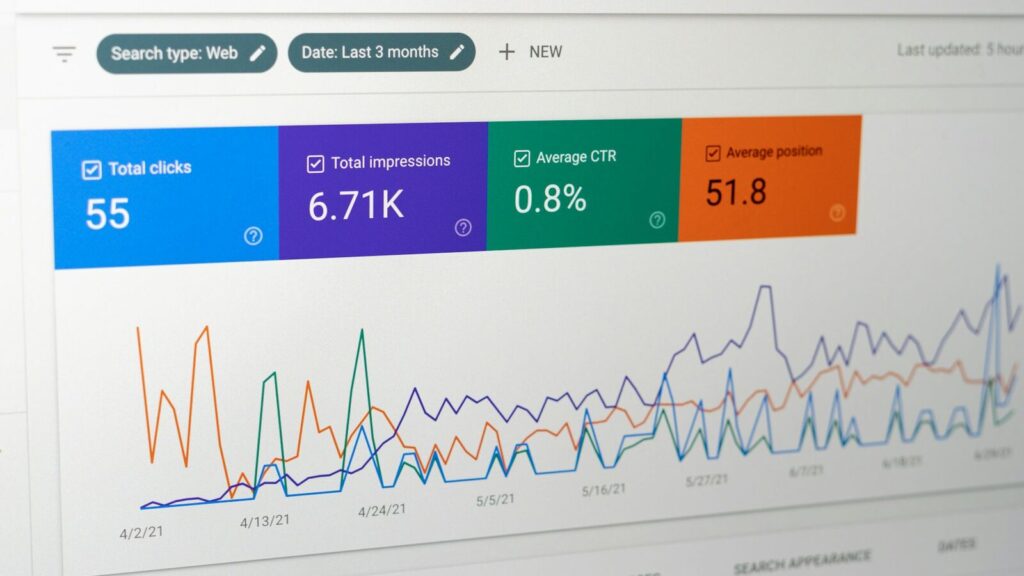
Open Google Search Console, look at the Performance report and compare the date your clicks changed with the timeline above. If the drop does not line up with an update, the cause is more likely to be technical: a redesign, a plugin change, pages accidentally set to noindex or a server problem.
2. Wait until the rollout has finished
Rankings move around during the two weeks an update is rolling out. Changes made in a panic halfway through are impossible to measure. Let it complete, then compare a full week after with a full week before.
3. Find the pages that lost, not just the total
Sort by page in Search Console and look at which ones fell. It is usually a group of similar pages, not the whole site. Search for the terms they used to rank for and read what now sits above you. That is the standard Google has set.
4. Improve or remove weak pages
Rewrite thin pages so they answer the question properly, merge pages that cover the same ground, and remove ones nobody needs. Fewer, better pages is nearly always the right direction.
5. Fix the technical basics
Slow pages, broken links and a poor mobile layout will not cause a core update drop on their own, but they make a borderline site easier to outrank. Our guide to PageSpeed Insights and Core Web Vitals explains what to look for.
How long recovery takes
Be realistic about this. Google’s own core update guidance says improvements can take months to be reflected, and the biggest gains often arrive with a later core update. With four of them this year, the gaps are shorter than they used to be, which is one small piece of good news.
Nobody can guarantee a recovery, and anyone who promises one is guessing. What you can control is whether your site is a better answer than it was.
Preparing for the December update
Google has given advance notice of the December core update, which it does not often do. Use the time. Check Search Console for errors, note your current positions for the terms that matter so you have a baseline, and deal with any obviously thin or duplicated pages before it starts.
If you would like a second opinion, our SEO service starts with an audit of exactly this: what dropped, when, and what is most likely to bring it back. Get in touch and we will take a look.
Photo by Justin Morgan on Unsplash.